
Window Film for Restaurants and Cafés
A sunny window table can be one of the best seats in a restaurant, until the afternoon glare makes it uncomfortable. A café may need relief at the ordering counter while still looking bright and welcoming from the street. The right window film starts with how your space works throughout the day.
WindowTint.biz helps restaurants and cafés across Southern California compare film for solar heat, glare, visual privacy and exposed-glass protection. We visit the property, review the glass and bring samples so you can see the choices before deciding.
Customer feedback on commercial window film
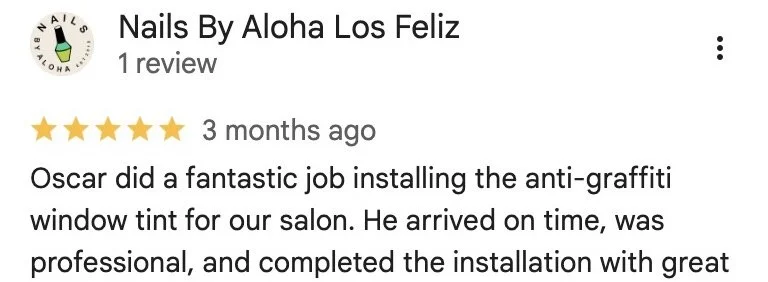
Nails By Aloha Los Feliz · 5-star Google review. Review excerpt.
Oscar did a fantastic job installing the anti-graffiti window tint for our salon. He arrived on time, was professional, and completed the installation with great
Sunni Campbell · 5-star Google review. Review excerpt.
Highly recommend for all commercial building needs.
Look at the tables and counter that need help
Two windows in the same dining room can create very different problems. Direct sunlight may reach breakfast seating early, move across a payment screen at lunch and affect a west-facing booth later in the day.
During the consultation, we discuss where the discomfort occurs and when you notice it. Seating positions, glass orientation, awnings, interior lighting and the view all help guide the selection. We also consider whether the concern is direct glare, solar warmth or a combination.
Solar-control film can reduce heat coming through treated glass. It cannot solve every source of restaurant heat, including cooking equipment, ventilation issues or a busy room. Keeping the window-related goal specific makes it easier to compare suitable options.
Balance glare relief with the dining room's appearance
Film choices differ in how much visible light they transmit, their color and their reflectivity. A stronger glare-control choice may change the brightness or appearance more than a lighter option. Samples help you compare those trade-offs on the actual glass.
For a restaurant, that comparison should consider both directions: what diners see outside and what someone walking past can see inside. Displayed menus, window lettering, table lighting and the colors of interior finishes deserve attention too.
A lunch-only café and a restaurant open into the evening may make different choices. We discuss your operating hours and the appearance you want during daytime and evening service. Our storefront window film page explains broader street-facing visibility considerations.
Treat evening privacy as a separate choice
Reflective solar film should not be relied on for privacy after dark. When the dining room is brighter than the street, people outside may be able to see in.
If a waiting area, private dining space or lower section of glass needs visual screening, frosted or decorative coverage may be worth considering. Coverage height matters: a band that screens a seated diner may leave a standing person visible. Full coverage changes the view more substantially.
We can discuss where screening belongs and where clear sightlines are important. Film selection should support the way the room is used without assuming every pane needs the same treatment.
Customer feedback on commercial window film
Kenny Burdi · 5-star Google review. Review excerpt.
We recently used WindowTintbiz for window tinting at our business, and the experience was outstanding
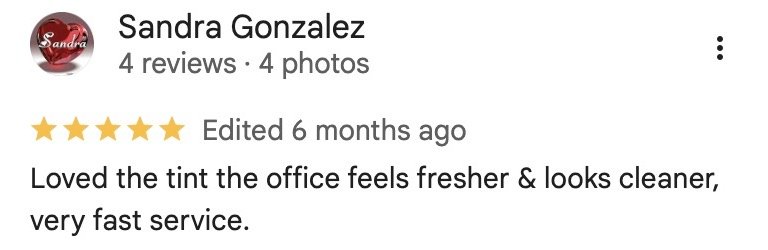
Sandra Gonzalez · 5-star Google review. Complete short review.
Loved the tint the office feels fresher & looks cleaner, very fast service.
Consider exposed-glass protection at the entrance
A street-facing café may also want a replaceable surface layer on an entry door or display pane. Anti-graffiti film is intended to take certain surface damage so that the film can be replaced when the underlying glass remains suitable.
This is a different goal from reducing heat or adding visual privacy. Any combination of treatments requires a review of the glass, products and application surfaces. Anti-graffiti film will not repair existing etching, and it does not make a window unbreakable.
For a regional surface-protection example, see our Hollywood storefront installation. That project involved new storefront glass on Sunset Boulevard.
Plan around service and cleaning
Restaurant windows often sit behind booths, plants, counters or freestanding displays. We discuss the working space needed and any items that must be moved before agreeing an installation plan. Entrances and neighboring tenants also need consideration.
Tell us about service periods or other access constraints during the consultation. After reviewing the property, we agree the working area and schedule with you so your team can plan around the installation.
We also review window graphics and the selected film's cleaning instructions. Your cleaning team needs to know which surfaces are treated and how to care for them. For leased premises, the operator and landlord should confirm any approval requirements before work proceeds.
A related hospitality project
Our Temecula winery and event-venue project addressed sunlight through a large glass wall where guests wanted to retain vineyard views. It is a useful example of weighing glare relief against the importance of a view.
Your restaurant's glass, layout and lighting will be different. The consultation is where we compare options for your space rather than carry over another venue's specification.
Restaurant and café window film questions
Does every window need the same film?
No. Different exposures or privacy needs may justify different treatments. We also consider how those choices look together from inside and outside.
Will film make the dining room darker?
It can change visible light levels. The amount depends on the selected film and glass. Samples let you compare appearance alongside the heat and glare goal.
Can we start with the seating that has the biggest problem?
We can discuss a selected area and price that scope, including how it will look beside untreated glass. A wider project can be considered separately.
See the options at your restaurant
The on-site consultation is free. Our team measures the windows, takes project photos, brings samples and answers your questions. You do not need to prepare measurements or send photos before contacting us.