
Replace Damaged Anti-Graffiti Film on Commercial Glass
Scratched, etched or lifting protective film can leave a storefront looking worn even when the glass underneath may still be usable. WindowTint.biz assesses existing anti-graffiti film and replaces suitable damaged film on storefront windows, entry doors and other commercial glass throughout Southern California.
The first step is checking what is actually damaged. A mark may be on the film, beneath it or on an unprotected surface. You do not need to diagnose the problem before calling. Our free on-site consultation gives you a clear starting point and a price for the work you choose.
Customer feedback on commercial window film
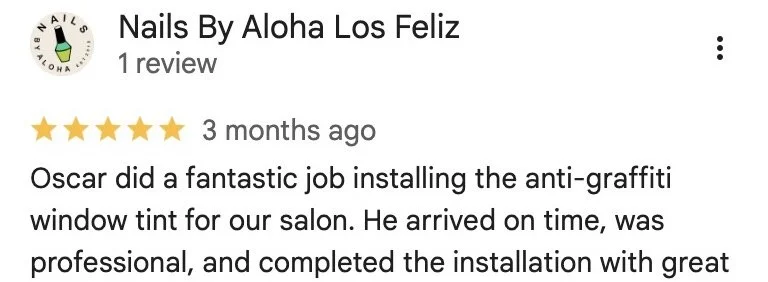
Nails By Aloha Los Feliz · 5-star Google review. Review excerpt.
Oscar did a fantastic job installing the anti-graffiti window tint for our salon. He arrived on time, was professional, and completed the installation with great
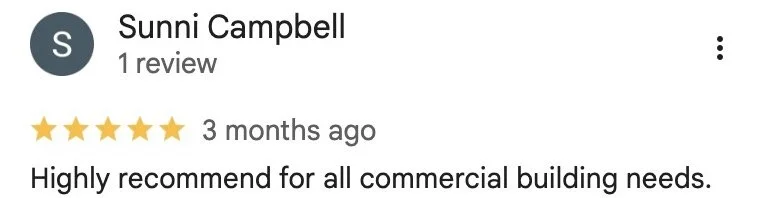
Sunni Campbell · 5-star Google review. Review excerpt.
Highly recommend for all commercial building needs.
Check the film and the glass before choosing the work
Anti-graffiti film is a removable, sacrificial surface layer. When damage stays in that layer, replacing the film may let you keep the existing pane. Deep scratches, etching or impact damage can still reach the glass. Removing film does not repair glass that was already damaged.
We inspect the surface, the existing treatment and the affected area before recommending the next step. Cloudiness or a visible scratch alone does not settle the cause. There is no need to peel an edge, scrape a mark or try a strong cleaner to prepare for our visit.
Depending on the condition, the appropriate scope may be:
Cleaning that is suitable for the existing material
Removing damaged film, preparing sound glass and installing a new protective layer
Pausing film work while damaged glass receives a separate glazing or restoration assessment
Our anti-graffiti window film guide explains the protective layer, its limits and what 4-mil and 6-mil labels mean.
Define the panes that need attention
A damaged entry door does not automatically mean every display window needs new film. We look at the affected panes, the condition of neighboring film and the appearance you want to maintain.
The proposal can distinguish a door, sidelight, fixed display panel or shared building entrance. It also needs to identify the treated side of the glass. A storefront with interior solar film may have a separate protective layer outside, and the two should not be confused.
For a retail plaza, we can discuss the selected tenant frontage within the property's wider appearance requirements. Our shopping-center window film page covers planning for several tenants at one property.
Remove the old layer and assess the exposed surface
Replacement involves more than putting another sheet over the damage. The existing film is removed, remaining adhesive and surface contamination are addressed, and the exposed glass is checked before new material is installed.
Some underlying conditions become clearer only after removal. If the glass is etched, scratched or otherwise unsuitable, that finding can change the proposed work. We explain what is visible and what needs to be resolved rather than promise a like-new pane underneath every damaged film.
Our Hemet anti-graffiti replacement project shows an actual commercial replacement: old film removed, glass prepared and a new layer installed. It illustrates the process without assuming every property's glass is in the same condition.
Customer feedback on commercial window film
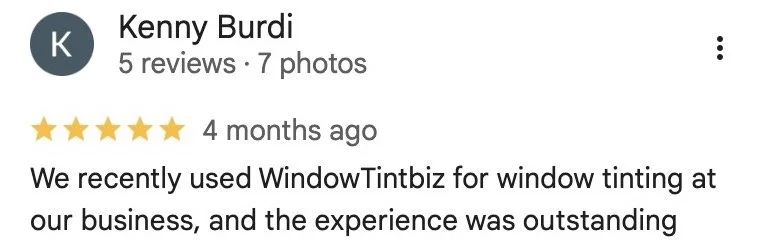
Kenny Burdi · 5-star Google review. Review excerpt.
We recently used WindowTintbiz for window tinting at our business, and the experience was outstanding
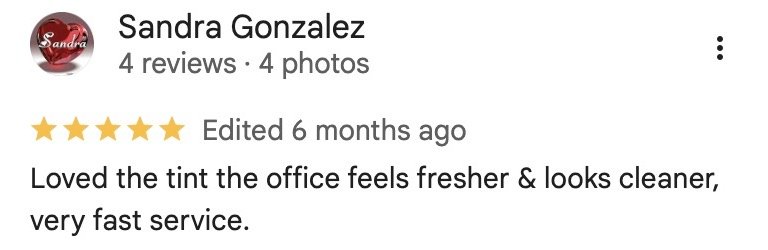
Sandra Gonzalez · 5-star Google review. Complete short review.
Loved the tint the office feels fresher & looks cleaner, very fast service.
Match the replacement to the present glass
The old specification is a starting point if it is known, not an automatic choice. We consider the glass, coatings, exposure, existing interior treatments, signs and graphics before recommending a replacement.
A pane replaced since the original installation may need a fresh compatibility review. Likewise, adding film over an unidentified existing layer is not a default solution. Product selection and installation need to suit the actual surface.
If your main concern is peeling solar tint or unwanted frosting, see our broader window film removal and replacement service.
Coordinate access and future care
Before work is agreed, we clarify who authorizes the glass treatment, who provides access and which work is included. A tenant's daily access and a building owner's approval can be separate matters. Lease responsibility should be settled by the parties involved.
We discuss the work area around entrances, displays and neighboring businesses. Timing depends on the agreed scope, surface condition, selected product and access arrangements.
For a Santa Monica storefront, our local replacement and access guide covers the distinction between private glass work and public-space use, including Third Street Promenade.
After installation, the selected film's care instructions matter. The person cleaning the windows should know which surface has film. Keeping the product, installation date and pane location with the property records also helps when a later replacement is needed. New vandalism may require separately quoted work.
Managing street-level glazing in DTLA? See our Downtown Los Angeles anti-graffiti film guidance.
See our local storefront guidance for more Southern California areas.
Questions about anti-graffiti film replacement
Can you replace film on one damaged pane?
We can assess an individual pane. The recommendation depends on its condition, the adjacent film and the chosen replacement's appearance and suitability.
Will new film hide acid etching already in the glass?
Do not rely on it to do so. Anti-graffiti film protects a suitable surface going forward; it does not restore etched or scratched glass.
What if I do not know the existing film brand?
You can still contact us. We inspect the existing installation and explain any uncertainty that needs to be resolved before replacement.
Can anti-graffiti film coexist with interior solar film?
It may be possible, but the glass and both treatments need to be reviewed. Compatibility cannot be assumed from the fact that they are on different sides.
Start with a free on-site consultation
Our team takes the measurements and project photos, brings film samples and answers your questions. We review the glass and access, then price the suitable film and work you select. You do not need to measure windows, send photos or locate technical specifications first.