
Shopping Center Window Film for Owners and Property Managers
Shopping center window film needs to work for the property and the businesses behind the glass. One tenant may want less afternoon glare, another needs customers to see merchandise, and management may be trying to bring several generations of tint into a consistent exterior plan.
WindowTint.biz helps Southern California property owners and managers assess suitable film, define the work by storefront or shared area, and discuss approval and access before installation. A retail plaza consultation can cover selected suites or a larger group of windows.
Who approves the film, and which windows are included?
A tenant's request is a useful starting point, but it may cover only that business's immediate concern. Before work is agreed, the property's authorized contact needs to confirm who can approve the product, appearance, and coverage. A tenant's interest alone does not establish permission to change the center's glass.
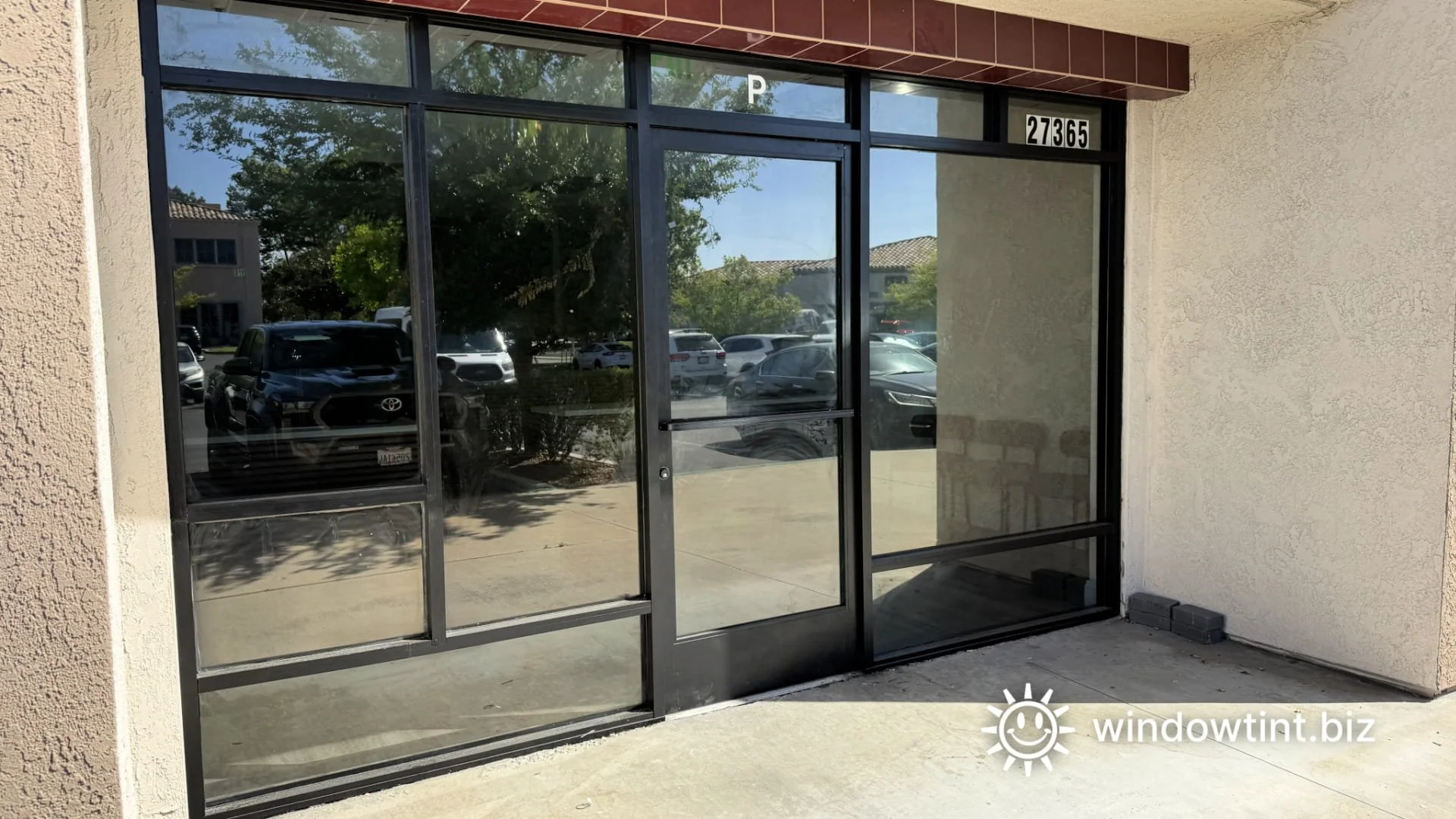
During the visit, we identify the proposed work by suite and pane location. That avoids uncertainty about an entrance door, a neighboring display window, or glass beside a shared walkway. The scope should distinguish management-approved work from tenant requests still awaiting a decision. A related storefront installation in Temecula covered 12 panes, including entry glass, sidelights, and transoms. A center proposal needs that clarity across the agreed suites.
The approving contact and the person opening a suite may be different people. Keeping those roles clear helps prevent a useful access conversation from being mistaken for approval of extra work. Management handles its own lease and property-approval process; the film proposal records the work being considered.
Can the center look consistent while each tenant keeps a useful storefront?
Start with the appearance management wants to preserve, then compare it with how each business uses its windows. A bright display frontage, a café seating area, and a service business seeking screening may need different treatment within the same center.
We compare suitable samples from the walkway and inside the suites. A darker or more reflective finish may affect views of merchandise. Existing glass color and previous replacement panes also matter: the same film will not necessarily look identical on different glass.
An agreed appearance plan can identify the intended finish, covered areas, and any approved suite-specific exceptions. For example, a business's request for screened lower glass needs to be considered alongside its neighbors' open displays. Our storefront window film guide explains the visibility and film-choice trade-offs in more detail.
Should every storefront be included in the first installation?
Not necessarily. A group of affected suites, one frontage, or shared glass can be assessed first. The important distinction is between the overall plan and the windows included in the current price. A center-wide appearance decision does not automatically authorize work in every unit.
For each proposed stage, we discuss the panes included, any old-film removal, the tenant contacts, and the appearance beside untreated windows. A suite awaiting approval or access should remain clearly outside that stage until its work is confirmed.
Different glass or existing treatments may also limit a shared specification. We check the intended film against the actual glazing and manufacturer guidance rather than extending one suite's selection across the plaza by default. The commercial window film guide covers the broader product choices; here the goal is a scope everyone can recognize.
Planning across several addresses? See commercial property portfolio window film.
What happens to the film when a tenant moves out?
Turnover is a useful time to review what stays on the glass. A departing tenant's privacy finish or old tint may not suit the next business or the center's current appearance plan. Sound film may still be appropriate, while damaged or unwanted material may need removal.
We can assess removal only or removal with a suitable replacement. Peeling back a corner or scraping adhesive before the visit is unnecessary. Taking film off does not repair scratches, coating damage, or a failed window seal, and some underlying conditions may only become clear during removal.
If the aim is to match neighboring suites, compare the proposed replacement with the glass that will remain. A previous product name is helpful background, but it cannot promise an exact match after glass changes, aging, or changes in product availability. Our window film removal and replacement guide explains the assessment and surface-preparation limits.
For storefront graphics and protective-film planning during tenant changes, see our Ontario anti-graffiti film guidance.
How do you plan access when businesses operate separately?
An occupied retail plaza can have several people controlling different doors and work areas. We discuss access with management and the relevant tenant contacts before agreeing the installation plan. Available work periods need to be confirmed for each included suite.
The plan should identify who provides entry, what space near the glass needs to be clear, and how the work relates to customer entrances, displays, deliveries, and shared walkways. Access to one shop should not be treated as access to its neighbor.
Where work is staged, the agreed areas and contact arrangements need to follow each stage. Timing depends on the actual windows, removal work, and site conditions. We discuss practical options after inspecting the property rather than assuming every business can follow the same schedule.
How can maintenance keep track after tenants and panes change?
Keep the completed work with the property's maintenance records, identified by suite and pane location. Useful details include the installed product, installation date, coverage, which side of the glass is treated, care instructions, and any applicable product warranty information. This gives a new manager or cleaning contractor a clearer reference than a tenant's name alone.
Follow the selected film's curing and cleaning instructions. If a pane is replaced later, the new glass needs a fresh suitability and appearance check before reapplying film. The earlier treatment is a reference for that decision, not automatic approval for the replacement glass.
For exposed glass where surface damage is the concern, our anti-graffiti film guide explains thickness labels and how we select a suitable product. Damage limited to a replaceable film may allow the glass to remain; damage underneath needs its own assessment. Our commercial anti-graffiti replacement in Hemet shows worn film being removed and replaced on commercial windows. Record later replacements too, so the property team knows what is currently on each pane.
What happens during a free shopping center consultation?
Our team visits the property, takes measurements and project photos, brings film samples, and answers your questions. We look at the windows and existing treatments, discuss the needs of the included businesses, and help make the scope clear. You do not need to measure, photograph the glass, or find window specifications before contacting us.
Once a suitable film and selected scope are confirmed, we give you a price on the spot. We explain any compatibility, approval, or access question that needs checking before work is committed. Removal, replacement, and later stages should be clear in the proposal.
We work across Southern California. Contact us to discuss your shopping center or retail plaza and arrange the first visit.