
Window Film Planning for Commercial Property Portfolios
Managing windows across several addresses means making related decisions for buildings that may be very different. One location might have afternoon glare, another may need visual privacy, and a third may have damaged anti-graffiti film at its entrance.
WindowTint.biz helps commercial property owners and multi-location businesses plan suitable window film across Southern California. We start with your priorities, then assess the glass and conditions at the locations included in the project. The goal is a clear scope for each property and a consistent basis for deciding what comes next.
Customer feedback on commercial window film
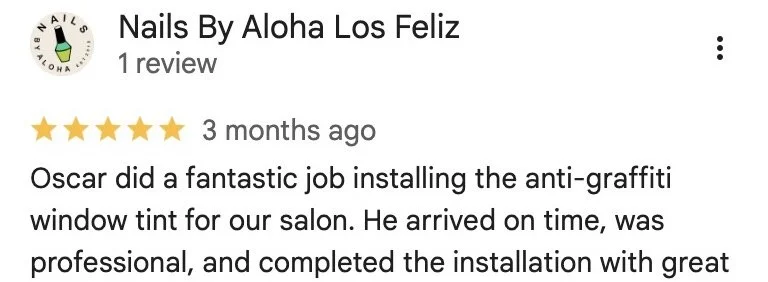
Nails By Aloha Los Feliz · 5-star Google review. Review excerpt.
Oscar did a fantastic job installing the anti-graffiti window tint for our salon. He arrived on time, was professional, and completed the installation with great
Sunni Campbell · 5-star Google review. Review excerpt.
Highly recommend for all commercial building needs.
Set common goals and assess each address
A useful starting point is deciding what the properties should have in common. That might be an inviting storefront appearance, less glare at customer counters or a replaceable surface layer on exposed entry glass.
The same product is not automatically the right answer everywhere. Buildings can have different glass, coatings, orientations, existing films and interior lighting. A pane replaced during a renovation may differ from the older glazing beside it.
We review the relevant conditions before recommending film. If several locations need a related appearance, samples help compare the result against each building's actual glass. A common visual goal can still require site-specific choices.
For senior-living properties, our senior-living community window film guide covers resident rooms, dining areas and shared lounges.
For the individual applications, see our guidance on storefront window film and office heat and glare.
Separate project approval from local access
The person approving a multi-location project may not be the person who opens each building. Landlord approval may also vary between addresses, even when the same business occupies them.
During planning, we discuss who can approve the treatment, who coordinates each site's access and who receives the proposal. That gives each site a clear approval and access plan.
Where a property has multiple tenants, decisions about common-area glass and individual storefronts should remain clear. Our shopping-center window film page covers that one-property situation in more detail. A portfolio plan adds the need to coordinate several separate addresses.
Begin with the locations that matter most
You do not need to commit every property at once. We can discuss a first location or selected area, compare suitable samples and define the initial work before a wider stage is considered.
A first project can help clarify the appearance you prefer, the access arrangements that worked and the records useful to your team. Its result still needs to be reviewed against the conditions at the next building.
Possible priorities include a tenant's persistent glare concern, an entrance with damaged protective film or a newly glazed storefront ready for assessment. Those are decisions to make with the property team, rather than reasons to apply the same film indiscriminately across the portfolio.
Customer feedback on commercial window film
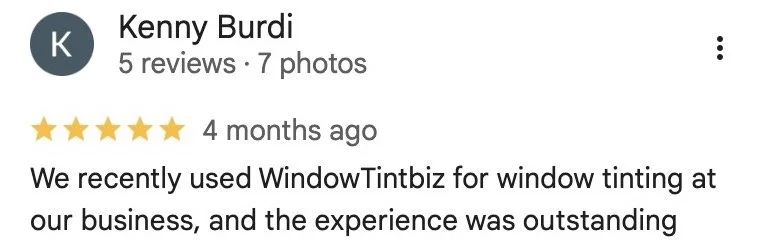
Kenny Burdi · 5-star Google review. Review excerpt.
We recently used WindowTintbiz for window tinting at our business, and the experience was outstanding
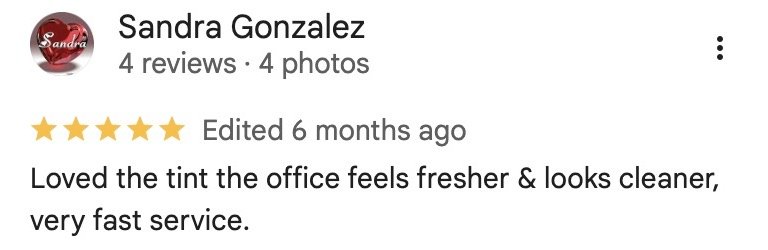
Sandra Gonzalez · 5-star Google review. Complete short review.
Loved the tint the office feels fresher & looks cleaner, very fast service.
Make the quote clear by location and scope
A multi-address proposal needs to show what is included at each site. Glass quantity is only one part of the work. Existing film removal, surface condition, access, graphics and the selected products can also affect the scope.
We discuss which locations belong in the current stage and which remain future options. That distinction gives your team a clear view of the approved stage and the choices available later.
Installation timing is confirmed around the assessed conditions and authorized access. Different buildings may need different access arrangements, installation time and pricing, even when they share a common project brief.
A location-and-approval record for the current stage
A simple record can keep the approved work separate from future options. These are blank planning fields to agree together, not information you must collect before booking:
Address or site reference; suite, elevation and pane location
Goal; proposed product, application side and coverage
Removal or access dependency; included installation stage
Scope approver; local access contact; decision still open
If one location is being renovated, our guide to window film for a tenant improvement covers the single-buildout approval and timing questions.
Plan anti-graffiti replacement around affected glass
For public-facing storefronts and entries, anti-graffiti film can provide a replaceable surface layer. A portfolio may include both first installations and panes where damaged existing film needs removal.
When damage is reported, the affected pane and underlying glass need assessment. Damage confined to the film may allow replacement of that layer. Film cannot repair etching already in the glass, and deep damage can extend beneath it.
The next step should follow the condition of the affected area. One damaged storefront does not automatically require new film at every address. Where suitable, discuss a limited replacement scope and how it relates to neighboring panes.
Our anti-graffiti film guide explains this approach. The selected product's care instructions should also be shared with each site's window-cleaning contact.
Record the affected pane before choosing a replacement scope
For a reported graffiti incident, keep the record specific: building and entrance; pane reference; observed damage; film and glass condition still to assess; proposed work; approved replacement scope; and the site's care contact. Leave uncertain conditions marked for assessment rather than treating the report as a diagnosis.
Our anti-graffiti film removal and replacement guide explains the next-step assessment.
Keep a usable reference for future changes
A helpful property record connects the address, building or suite and pane location to the installed product and treated surface. The installation date and care information make that reference more useful when staff, tenants or cleaning contractors change.
We can discuss the information needed for the agreed project during the consultation. You do not need to build a window inventory before contacting us; our team measures and photographs the project glass.
Later glass replacement or a change in use should prompt another review. An old film specification alone does not establish suitability for a new pane or a different privacy requirement.
Agree what to retain after installation
For the agreed project, discuss a completion reference with these fields:
Site and treated pane; actual installed product and application side
Installation date; final coverage or layout reference
Applicable care and warranty documents
Any change from the approved scope or question still to resolve
Keep it with that property's records so a later repair or glass replacement can be reviewed against what was actually installed.
Examples of different commercial needs
Our Temecula storefront project and Hemet anti-graffiti replacement illustrate different types of individual commercial work. They show why a portfolio can need more than one approach to its windows.
Questions about planning several properties
Can we approve one location before the rest?
Yes. Discuss a defined first stage and identify which locations remain outside it. Later sites still need their own glass, access and scope review.
Does one film specification carry across every building?
Not automatically. Glass, coatings, exposure and room use can differ between properties and even between panes at one site. Review the actual glazing before carrying a specification forward.
What should a quote separate for several sites?
Look for the included addresses and panes, selected product, existing-film removal, access arrangements and any staged visits. Pricing should follow the assessed scope at each site.
Is damaged anti-graffiti film covered by the product warranty?
Do not assume vandalism replacement is covered as a manufacturing defect. Check the selected product's exact warranty terms and assess the underlying glass before deciding the replacement scope.
Discuss your first property with us
We serve commercial properties throughout Southern California, including Los Angeles, Orange, San Diego, Riverside, San Bernardino and Ventura counties. The free on-site consultation can begin with the property or locations you want to address first.
Our team brings samples, takes measurements and project photos, and answers your questions. We review the suitable options and provide pricing for the selected scope. You do not need to send measurements, photos or glass specifications to get started.